31 July 2011

WOW!! I can see your underwear with these!

Little Timmy Asspratt lived down the street when we were kids. He needed special glasses and had to wear a helmet with a solar collector on it to power the industrial ear-warmers he was forced to wear winter summer alike. Was he picked on? No, not much but most kids shyed away from him because their fillings hurt when he was nearby. He ruined TV reception within a radius of 200 feet, so he wasn't invited over for afterschool gatherings very much. I heard he went into managementwith the TSA.

Rex The Wonder Dog

 Rex The Wonder Dog had a fairly long run with DC Comics in the 50s.


Apparently not only was Rex capable of human sapient thought and perception, he and his master were able to travel through time too.

Blast Vader from the comfort of your tabletop

A neato game from 1980. The drawbacks--- although fashioned to faintly resemble the Commodore PET computers of the day, no doubt this thing was smaller than you'd think. Probably 5 or 6 inches wide, like the handheld games popular at the time. And it looks like a rather primitive game, with a few LEDs and capable of a few beeps and boops. In today's money, it'd cost over $130.

Oh Schlit!!

Info pages from Dell Four Color

From #1016  Smokey The Bear, Aug. 1959


From #1552 Comanche, Apr. 1962


From #455, Johnny Mack Brown, Mar. 1953


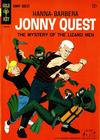
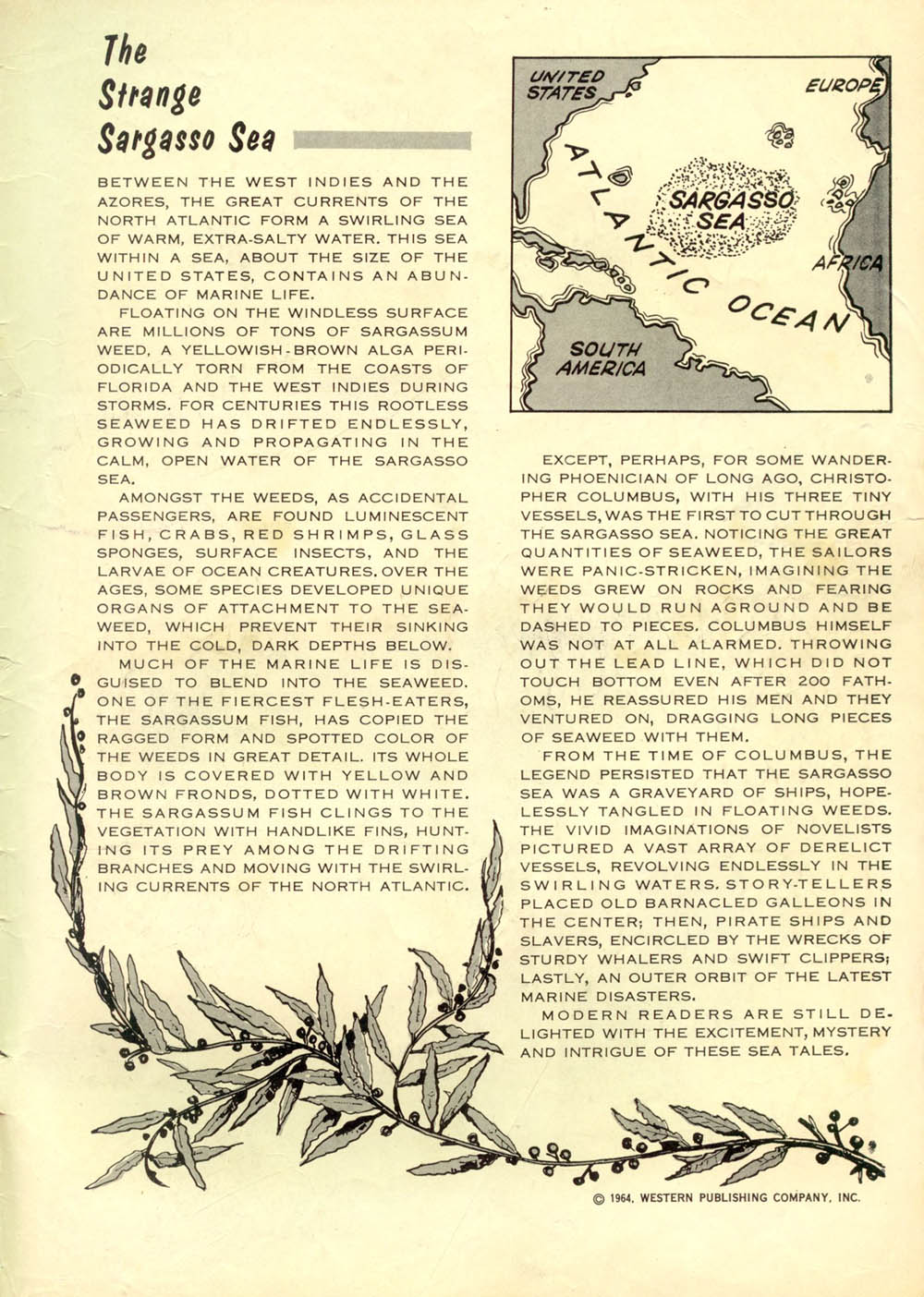
an educational page from Jonny Quest #1 December 64

During the latter half of their work on the Dell Four Color Series and for the first few years of the Gold Key Imprint, Western Publishing often included a one page educational short (usually) related to whatever that particular issue was about.


click to enlarge

30 July 2011

Dell educational page from Four Color 1294

During the last half of its long run, the Dell Four Color series began placing , on its last page or so, an educational short often related to whatever that particular issue was about.Gold Key continued this for their first few years too. .


March, 1962


drawn by Ray Bailey


Here's the cover:

No, You'll put someone's eye out with that thing!

From WONDER WOMAN #22, 1947


Note the authentic Native American dialect.

Hell's Kitchen

I don't know which is more disturbing in this 1950s illustration-- the color combinations or the mother-daughter June Cleaver outfits.

1960 Corvette

Welcome to Smeggy's Garage, where I'm going to blather on about some of my favorite cars and if you're so inclined you may add your comments and observations. What makes this different from the other 20 million car worship sites & blogs... nothing really. I intend to include road hazards (that is, old six banger Plymouths) as well as Really neato Machines. Maybe a better name for this blog would be ROAD MEMORIES,


First up, the 1960 Corvette.


1960 was a banner year for car history. The Big Three all introduced their new designs which , except for Chevrolet's, would define , more or less, Americaan cars for the next three decades, I'll examine the Ford Falcon, Chrysler Valiant and the less lasting Corvair in future sessions.


One thing that Chevy did have that lasted was the Corvette. Already 7 years old, the C1 design would have a few more years to go, and the '60 model was close to the pinnacle of that design.


When the Chevrolet Corvette debuted in mid-1953, no one could have imagined that this quirky plastic-bodied car would still be selling almost 60 years later. As of 2010, there have been seven generations of Corvette:

C1= 1953-1962

C2= 1963-1967

C3= 1968-1982

C4= 1984-1996

C5= 1997-2004

C7= 2005-


The 53-55 Corvettes had a different body and is really a quite different car than the later C1s. We'll look at the earlier ones later.


By '60 the Corvette was preety much locked into the title as Americ'a's Sports Car. Ford had attempted to compete with their Thunderbird, but by the end of the 50s they'd thrown in the towel and turned it into a "Personal Luxuary Car", which was successful in its own right and had many imitators. To be fair, the T-bird was probably much more of a success and asset to Ford than the Corvette has ever been to GM.


So in 1960, 4 or 5 years before the advent of muscle cars, if you wanted a domestic sports car, you got a Corvette.


You could go from zero to sixty in under 9 seconds, not impressive by today's standards but not bad for a street auto 50 years ago.


But this blog isn't so much about performance and nuts & bolts as it is about style and automotive culture.


Here's a page from the 60 Corvette brochure.


By 1960 the lines of the Corvette were less clutter by chrome geegaws which had reached their height with the '58 model. Like all Corvettes, it offered a passnger compartment grudgingly, a tight cockpit with a useful passenger grab bar. Trunk space was limited, but then this wasn't intended as a family truckster. In the fall of '60 an iconic TV show premired, "Route 66" which featured 2 guys travelling 'cross country from adventure to adventure in a blue Corvette. Of course, it would have been more practacal and comfortable had they taken a station wagon, but it just wouldn't have had the same flair.


And flair really has been a Corvette trademark for six decades now. They are fast as hell, but really, when do you ever use that performance on the street? They're uncomfortable and hard to get into unless you're an agile athelete. They are sky high in price and insurance premiums. But hell, we still love 'em and at least for me, they're still the true American Sports Cars.

Vic Prezio's Orignal Cover Art for Magnus Robot Fighter #17 & #21


February 1967


Now we know what became of Kato

 Burke's Law was a witty and campy crime drama/comedy in the mode of today's MONK or PSYCH.


In a 1963 episode written by Harlan Ellison, Henry, Burke's Filipino chauffeur, mutters "I never had this aggravation when I worked for the Green Hornet!"

The episode features Burgess Meredith and Sammy Davis Jr as "Cordwainer Bird", Ellison's pen name. There is also a character named Devora Cato.


Original Air Date—25 October 1963

More Powers Art

This is from the 1959 Dell paperack edition of Vonnegut's Sirens of Titan, one of his better books in my opinion

Death from Below Belt Level

Yeah, kids were tough back then. You know, Scout Camp was really just a code word for Boot Camp. Honest. I personally led the 32nd Woodchuck Division on a pre-naptime snipe hunt.


We didn't get any, but the older kids really appreciated the way we kept those snipes at bay.


They mentioned it quite often!

Frontier Fightin' Kids

We who grew up in the mid 1960s , who had to fight commies & space robots in our parks and alleys (See earlier post), owe a huge debt to those who came before; mainly those kids in the 50s with their coon skin caps who defended those same parks from the ravages of the Indians. With the Native American Menace out of the way, we Boomers Mark II were free to blast away at the hideous swarms from commieland and outer space.

Submariner Duty After School

Why do you think nuclear missle equipped subs are called boomers? I'll tell ya, you soft gen x and y'ers . We kids in the 50s & 60s not only had to do our homework with out even a frickin' calculator let alone a computer, but before dinner we had to save the country from nazis, commies and space aliens. Every kid was equipped to the teeth, locked and loaded let me tell ya. I still have some of those nukes somewhere..or did I give them to the kid down the street.....

Solar Powers


I'm a fan of pulp/paperback artists such as Norm Sanders and Richard Powers, two vastly different talents that graced many a fantastic tale. Powers ((February 24, 1921 – March 9, 1996) started out in a pulp style but is best known for his abstract type science fiction covers. He also did the first two covers to one of my favorite comic books--Dr Solar.


Dr Solar was one of GOLD KEY COMICS' first publication, in 1962. GOLD KEY was a division of Western Publishing which had for years packaged and produced comics for Dell, which appeared under Dell's logo. The vaguely documented rift between the two groups ended up with them both publishing their own comic lines. It was no problem seeing where the talent had resided, because Gold Key not only kept most of the titles they had been doing for Dell, including all of the Disney licensed properties, but came out with some great new titles as well. Dr Solar was followed by Russ Manning's MAGNUS, ROBOT FIGHTER and Del Connel's SPACE FAMILY ROBINSON. Most Gold Key comics had painted covers by George Wilson or Morris Golub, or if they were a TV / Movie adaption, a photo cover. However, Dr Solar Man Of The Atom issues 1 & 2 had covers by Richard Powers. To me, they express explosive energy barely held in check by the heroic Dr Philip Solar.


More About Powers

Original Cover Art by Morris Gollub


Tarzan #71, August 1955. A beauty of a cover!


Another Dell Information Page


Ray Bailey drew this nice one for a Steve Canyon four color, #804, June 1957


14 July 2011

Comic Book Short Story~ Creature Of Habit


From BORIS KARLOFF TALES OF MYSTERY #82, June 1978. Frank Bolle artwork.